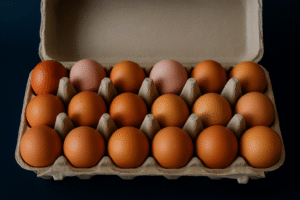
Fresh from Farm to You

Fresh farm eggs

When you buy eggs from a supermarket, you're often buying eggs that have already been sitting for weeks. By law, eggs can be sold up to 30 days after being packed, and farms also have up to 30 days from laying to packing. That means supermarket eggs can be nearly two months old by the time they reach your kitchen [ref].

Under certain conditions—especially during sales or slower turnover—eggs may have been stored for well over a month, and in rare cases up to three months old [ref].

Fresh eggs sink, older eggs float. The “float test” works because air builds up inside the shell as the egg ages. At The Egg Shack, our eggs are so fresh they’ll always sink straight to the bottom!

Why Age Matters

Older eggs lose quality over time: yolks become less firm, whites turn runny, and flavor diminishes. Freshly laid eggs, by contrast, have firmer yolks, superior texture, and the best nutrition [ref].

Not at The Egg Shack

At The Egg Shack, our eggs go from the coop to your hands in under 24 hours. No long storage, no extended shipping—just ultra-fresh, bursting-with-flavor eggs delivered straight from the farm.

Freshness You Can Taste

Every egg from The Egg Shack is laid, packed, and shipped within a day. The result? A noticeably firmer yolk, a better white texture, and an egg that cooks perfectly every time—whether you're poaching, scrambling, or baking.

Meet the Farmer: Timothy Jefferies

Meet the Farmer - Timothy Jefferies

Behind every tray of eggs from The Egg Shack is a story of determination, hard work, and vision. Meet Timothy Jefferies, a young South African entrepreneur who is proving that passion and perseverance can crack open big opportunities.

From Humble Beginnings to National Stage

Timothy’s journey began with little more than a dream and a handful of hens. Today, he’s not only building a business that delivers the freshest eggs straight from farm to table, but he’s also capturing the nation’s attention. His hard work and transparency earned him a place in the Top 20 of viaTV’s reality competition, “Maak My 'n Miljoener.”

The competition started with over a thousand hopefuls. Timothy stood out for his honesty, financial discipline, and bold vision. From the Brand Bank round to real-world business trials at ATKV Resorts, he proved that he’s not just building a business — he’s building a movement.

Entrepreneurship with Heart

What makes Timothy different is not just his drive, but his heart for the community. At every step, he has shown integrity, perseverance, and authenticity. His goal is not just to grow The Egg Shack, but to inspire other young South Africans to pursue entrepreneurship and believe in their dreams.

Every purchase at The Egg Shack is more than just buying eggs — it’s a vote of confidence in a young entrepreneur who is fighting to create a better future.

Be Part of the Journey

The road to the finale of Maak My 'n Miljoener is about more than television. It’s about proving that small businesses, powered by loyal supporters, can grow into something extraordinary. Each egg sold brings Timothy one step closer to victory — and to making The Egg Shack a household name across South Africa.

“This journey has challenged me more than I ever expected. It’s made me sharper, more confident, and even hungrier to succeed. I’m ready to take my business to the next level.”
Timothy Jefferies
Why Some Eggs Are White — The Egg Shack
Egg facts

Why some eggs are white (and why that’s great for your breakfast)
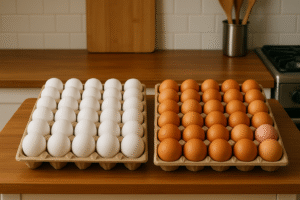
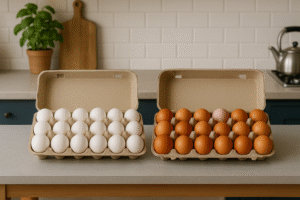
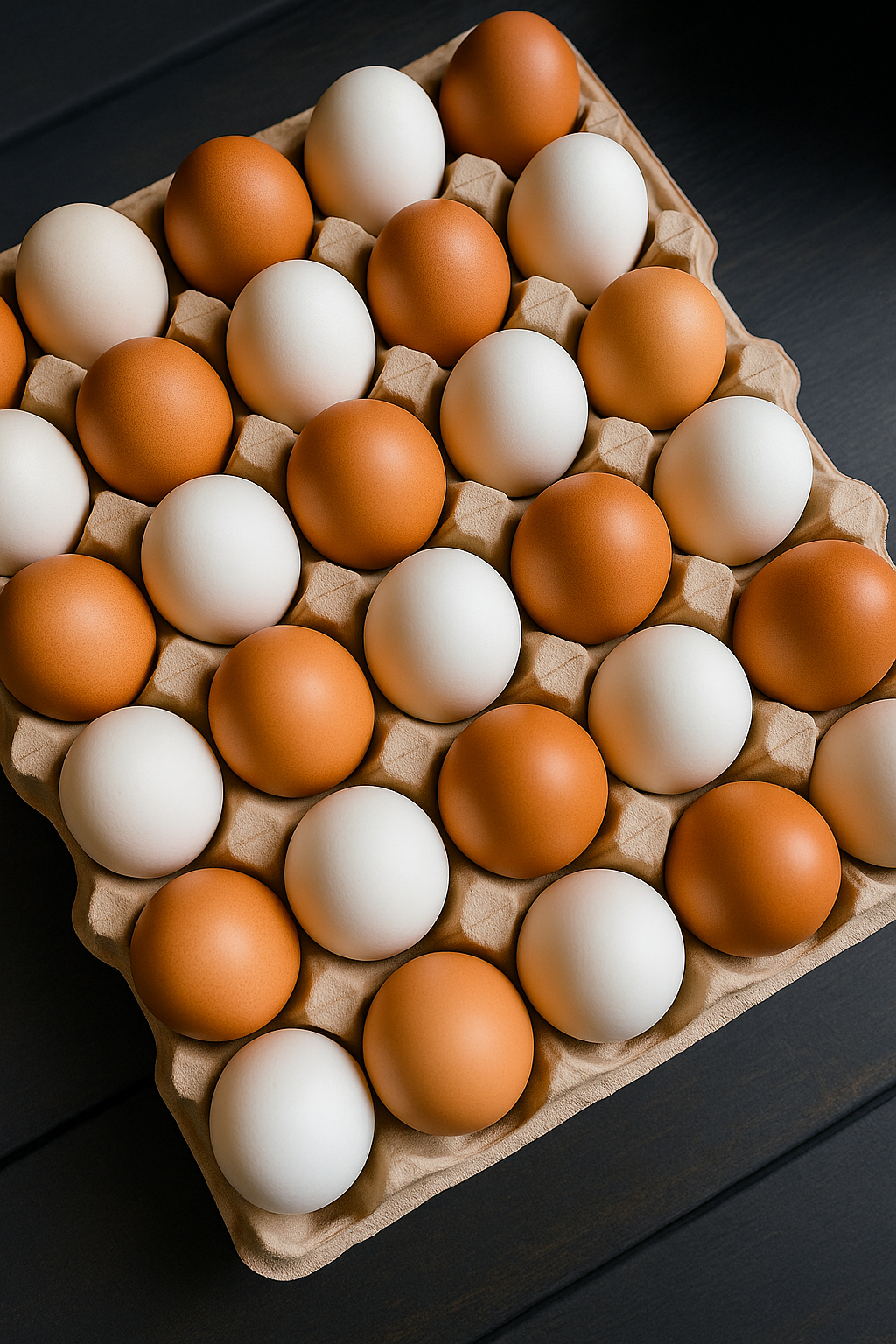
White eggs in a carton

Short answer: shell colour comes from the hen’s genetics — not the hen’s health or the egg’s nutrition. White-shelled eggs are simply laid by breeds that don’t add brown pigments to the shell. The inside’s the same classic, protein-rich egg you love. Don’t just take our word for it; the USDA and Academy of Nutrition & Dietetics both say nutrition doesn’t depend on shell colour.

So, what paints the shell?

All eggs start out with a white shell. Near the end of the egg’s journey through the shell gland, some breeds deposit natural pigments. Brown hues come from protoporphyrin IX, while blue-green shells (from breeds like Araucanas) come from biliverdin. If a breed doesn’t deposit pigment, the shell stays white — perfectly normal, perfectly delicious.

White vs brown: any real difference?

  • Nutrition: No meaningful difference. See the USDA and MSU Extension.
  • Taste & yolk colour: Driven more by the hen’s diet and freshness than shell colour. (Pasture and certain feeds can deepen yolk colour.)
  • Price: Brown eggs sometimes cost more for marketing or production reasons, not because they’re healthier. See Consumer Reports and USDA grading Q&A.
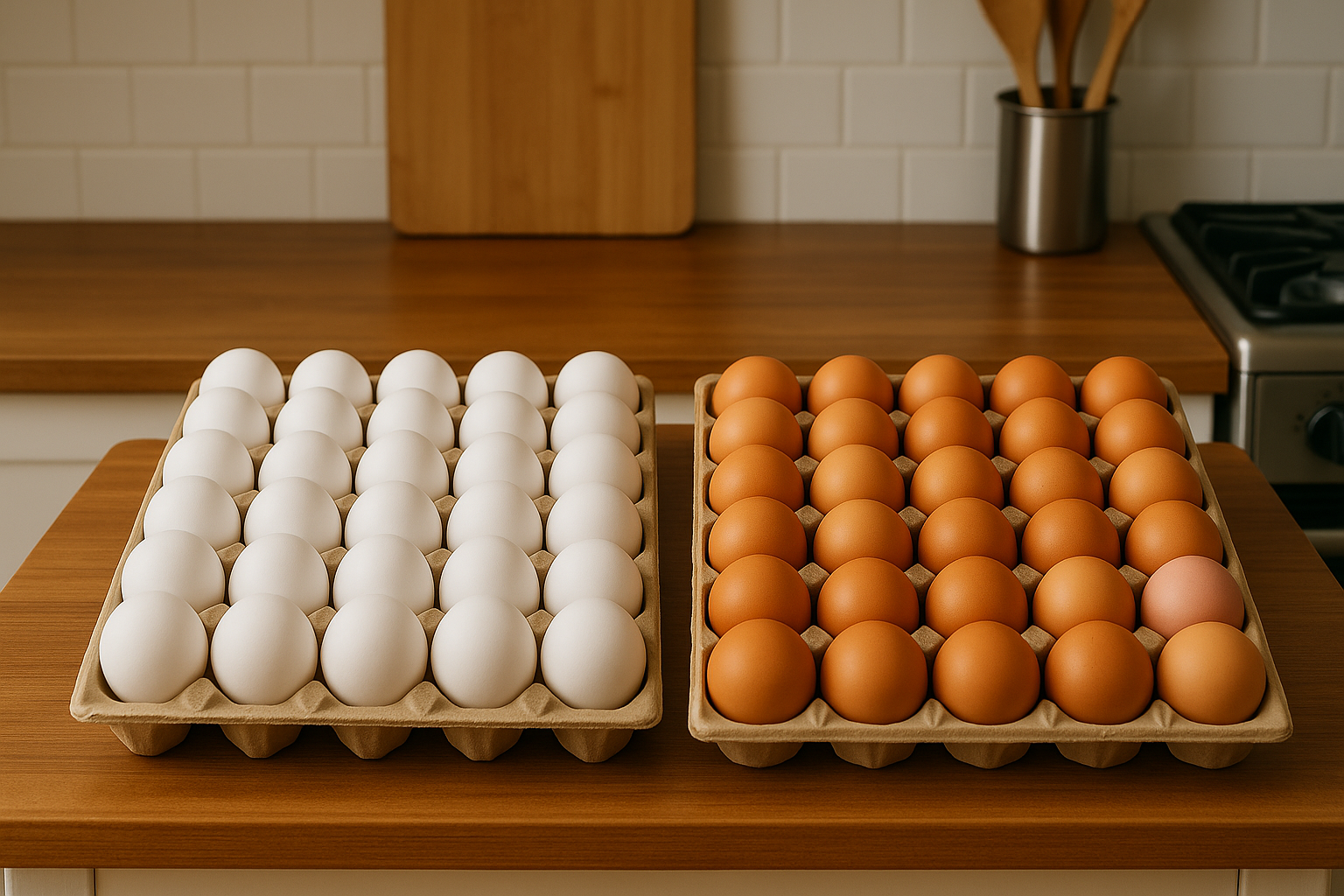
Bottom line: If you like the clean, classic look of white eggs, go for it. You get the same nutrition for the the same price point — just a sleeker aesthetic in the carton and on the plate.

But don’t people “prefer” brown eggs?

Preferences are mostly cultural and visual. Studies and reviews show shell colour affects perception, not nutrition. See this scholarly overview of cultural preferences and a poultry-science review of eggshell colour. In short: choose what you find beautiful.

Royal(ish) humour

There’s a cheeky myth that Queen Elizabeth II had very specific egg opinions. Some reports say her chefs made luxurious scrambled eggs; others note she often kept breakfasts simple. Whether her eggs were white or brown, we’ll leave to palace lore. Either way, here’s to a long, egg-fuelled life — crown optional.

Ready to crack on?

If you’re after that crisp, clean presentation (and the same great nutrition), white eggs are a brilliant pick. They’re kitchen workhorses that also look gorgeous in bakes and brunch photos.

P.S. Shell colour doesn’t change shell strength in a meaningful way either; that’s more about hen age and nutrition. Curious? Start with the science review.

🥚 Why Freshness Matters in Eggs

Fresh farm eggs

When it comes to eggs, freshness isn’t just a detail—it’s everything. From flavor and nutrition to cooking performance, the difference between an egg laid a few days ago versus one that’s been sitting for weeks is remarkable. That’s why at The Egg Shack, we always say: the fresher the egg, the better the experience.

1. Flavor at Its Peak

A fresh egg has a rich, vibrant taste. The yolk is creamy, slightly sweet, and full of natural depth, while the white cooks up firm and clean. Compare this to older eggs, which often develop a dull flavor and watery texture—freshness makes all the difference on your plate.

2. Nutritional Integrity

Eggs are nature’s multivitamin, packed with protein, vitamins, and minerals. But over time, nutrient density decreases. Research shows that fresher eggs maintain higher levels of vitamins A, D, and E, along with antioxidants that support overall health. Eating fresher eggs means getting the most from every bite.

3. Better Cooking Results

Ever tried poaching an older egg? The whites spread everywhere. Fresh eggs, on the other hand, hold their shape beautifully, giving you perfect poached eggs, fluffy omelets, and stunning sunny-side-ups. Bakers also prefer fresh eggs because they provide more structure, ensuring cakes rise higher and meringues whip stiffer.

4. Safety & Quality

The fresher the egg, the lower the risk of bacterial growth. While eggs have natural protective layers, time weakens them, making older eggs more prone to contamination. Choosing local, farm-fresh eggs ensures you’re eating with confidence.

Pro Tip: A truly fresh egg has a yolk that sits tall and a white that’s thick and compact. Do the water test at home: place your egg in a bowl of water. If it sinks and lays flat—it’s fresh. If it floats—it’s time to say goodbye.

Why The Egg Shack Cares

Freshness is at the heart of what we do. Every egg you buy from The Egg Shack comes straight from local farms, ensuring it reaches your kitchen within days of being laid. That means better flavor, better health, and a breakfast that truly shines golden.

🥚 Egg Tips & Tricks: Storing, Handling, and Smart Uses

Egg storage and cooking tips

Master eggs with these practical, kitchen-tested tips. From storage and safety to poaching, peeling, and using every last yolk and white—this guide keeps things simple and golden.

Smart Buying

  • Check dates: “Packed on” or “Best before” gives a freshness window. Choose the latest you can find.
  • Shell check: Avoid cracked or dirty shells. Micro-cracks invite bacteria and speed up spoilage.
  • Size matters… sometimes: Large eggs are versatile for most recipes; bakers often standardize on “large.”

Best Storage

Refrigerate promptly
Keep eggs in their original carton to limit moisture loss and odour absorption.
Not on the door
Store on a fridge shelf (colder, steadier), not the warm, swingy door racks.
Pointy end down
This keeps the air cell at the top and yolk centred for prettier poaches/fried eggs.
Keep them dry
Don’t wash before storage; moisture can pull bacteria through the shell. Wipe just before use if needed.
💡 Quick Freshness Test: Place an egg in a bowl of water. Sinks & lies flat = very fresh. Stands upright = older but usable. Floats = discard.

Handling & Safety

  • Crack eggs on a flat surface to reduce shell shards and contamination.
  • Use a clean bowl to crack, then add to your recipe—so a bad egg won’t ruin a whole batter.
  • Separate when cold (yolks hold better), then let come to room temp for whipping and baking.
  • Cooked egg storage: Hard-boiled eggs keep ~1 week in the fridge (in shell). Peeled? Cover with water in a lidded container and change water daily.

Cooking Tricks

  • 🍳 Sunnyside with set whites: Add a tablespoon of water and cover the pan for 20–40 seconds to steam the top without flipping.
  • 🥚 Silky scrambled: Low heat + constant stirring; pull just before done. A knob of butter or splash of cream at the end = glossy finish.
  • 💨 Tall omelettes: Whisk vigorously to aerate; cook in a preheated pan and fold off-heat to finish.
  • 🫧 Stiff meringue: Bowl must be grease-free; add sugar gradually once soft peaks form. A pinch of acid (lemon/vinegar/cream of tartar) stabilises.

Poaching & Peeling

Perfect poach
  1. Use the freshest eggs.
  2. Simmer, don’t boil (tiny bubbles).
  3. Add a splash of vinegar; crack into a small cup and slide in.
  4. Swirl gently for shape; 2½–4 min to your liking.
Easy-peel boiled
  1. Use eggs that are a few days old.
  2. Start in boiling water (not cold) for 9–12 min.
  3. Shock in ice water 10+ min; peel under running water.

Zero-Waste Uses

  • 🥚 Freeze extras: Whites freeze beautifully in ice-cube trays. For yolks, whisk with a pinch of salt or sugar first (prevents gelling).
  • 🍮 Yolk-heavy: Custards, curds, aioli, carbonara.
  • 🌨️ White-heavy: Pavlova, angel food cake, macarons.
  • 🌱 Shells: Rinse, oven-dry, crush ultra-fine; sprinkle sparingly around plants as a calcium boost (optional).
Chef’s Shortcut: Bring fridge-cold eggs to “room temp” fast by resting them in lukewarm (not hot) water for 8–10 minutes before baking or whipping.

Troubleshooting

  • Green ring on yolk (hard-boiled): Slight overcook. Next time, shorten time and cool faster.
  • Runny scrambled eggs: Pan too cool or eggs pulled too late; finish off-heat and let residual heat set.
  • Poach spreading everywhere: Egg too old or water boiling too hard.
  • Eggy smell: Store away from strong odours; keep sealed in the carton.

Note: Storage practices vary by country. If your eggs are washed or chilled at retail (most supermarkets), keep them refrigerated at home for best safety and quality.

Organic vs Free Range Eggs: What’s the Difference? Which Should You Choose?

When choosing between organic eggs and free range eggs, understanding the real differences can help you make informed, health-conscious choices. Here’s a breakdown designed for shoppers in Kempton Park, including what to expect from The Egg Shack.

What Are Free Range Eggs?

Free range eggs come from hens that have outdoor access and are not kept in cages—though the level of freedom and the size of ranges can vary. These hens often forage for insects and plants, which can enhance yolk color and flavor.

Nutrition-wise, free-range eggs frequently contain higher levels of fats such as omega-3 and more carotenoids compared to caged eggs, and studies show richer yolk pigments and better antioxidant properties.

However, free-range does not automatically guarantee superior nutrition; the feed quality matters just as much. Hens are sometimes fed conventional or GMO-containing feed and may receive antibiotics if unregulated.

What Sets Organic Eggs Apart?

Organic Eggs

Organic eggs are a subset of free range, governed by certification bodies. Their hens are fed certified organic feed free from GMOs, synthetic pesticides, and animal by-products. Using antibiotics or artificial treatments is prohibited except in veterinary emergencies.

Nutritional & Health Benefits Compared

Egg Nutrition

Free-range eggs may provide more omega‑3s and carotenoids than caged eggs, but results vary widely depending on diet and environment.

Preliminary evidence suggests organic eggs may deliver lower saturated fat, better omega‑6:omega‑3 ratios, and reduced levels of certain contaminants compared to conventional eggs.

Early human studies hint that organic egg consumption may be linked to lower inflammatory markers and higher circulating carotenoids, though more large-scale trials are needed.

Sustainability & Animal Welfare

Sustainable Egg Farming

Organic farms generally follow more sustainable and welfare-conscious practices, allowing outdoor range rotation, frequent resting of pasture, and avoidance of harmful chemicals—reducing antibiotic-resistant pathogens and lowering contaminants like pesticides and heavy metals.

Conversely, free-range systems, while more humane than industrial cage systems, may still use conventional feed and less strict welfare oversight.

Which Is Right for You?

Egg Selection at The Egg Shack
  • Choose Free Range Eggs if you’re looking for higher animal welfare compared to conventional eggs and richer flavor at a mid-range price.
  • Choose Organic Eggs if you prioritize strict feed standards, reduced chemical exposure, and improved traceability—even if the price is higher.

At The Egg Shack in Kempton Park, we proudly offer both organic eggs and free-range eggs, hand-selected and available for pickup. We emphasize ethical sourcing, local quality, and real transparency.

Visit The Egg Shack – Kempton Park Eggs

Shop Local Eggs in Kempton Park

Explore our full selection of Kempton Park eggs—from certified white organic eggs to truly free range eggs, all locally sourced, nutrient-rich, and fresh from trusted suppliers. Order today for local pickup or special family experiences. Feel good about where your eggs come from.

Timothy Jefferies Rises to the Top 20 in “Maak My 'n Miljoener” TV Competition

South Africa – July 2025

Description

Timothy Jefferies, proud owner of The Egg Shack, is proving to be one of South Africa’s most promising young entrepreneurs — now officially in the Top 20 of the dynamic viaTV reality competition, “Maak My 'n Miljoener.”

The Journey from 1,000 to 20

The journey began with over a thousand hopefuls, but Timothy quickly distinguished himself, earning a place in the Top 120. From there, the pressure intensified. Contestants were asked to open their books — sharing turnover, expenses, and profit — giving judges real insight into the viability of each business. Timothy’s transparency and solid financial performance earned him a spot in the Top 60.

Then came the intense “Brand Bank” round — a challenge placing contestants on the iconic red couch, face-to-face with five expert judges. Questions flew about branding, business strategy, and long-term vision. Timothy admits he passed “by the skin of his teeth,” but it was enough to land him in the Top 30.

Real-World Business Trials

The next phase took contestants out of the studio and into the real world. They visited four ATKV Resorts — Buffelspoort, Kleinkriba, Goudini Spa, and Hartenbos — where they were tested on live business challenges that demanded excellence in teamwork, leadership, innovation, and execution.

Timothy thrived under pressure, consistently demonstrating not just strategic thinking, but also authenticity, perseverance, and integrity. His performance earned him a spot in the Top 20.

The Road to the Final

Now standing proudly among South Africa’s best young entrepreneurs, Timothy’s final hurdle is to grow The Egg Shack in the months ahead. The finale — a grand gala event at the Atterbury Theatre — will crown the entrepreneur who shows the most traction, resilience, and readiness to scale.

“This journey has challenged me more than I ever expected,” says Timothy. “It’s made me sharper, more confident, and even hungrier to succeed. I’m ready to take my business to the next level.”

Support the Mission — Be Part of the Win

Every item sold at The Egg Shack — no matter how big or small — counts as a transaction in Timothy’s books and brings him one step closer to victory. By purchasing from his business, you’re not just supporting a local entrepreneur — you’re fueling a dream, backing a movement, and helping crown South Africa’s next millionaire.

Buy something today. Be part of the journey. Help make Timothy Jefferies and The Egg Shack the next big South African success story.

Place Your Order

Contact Us

Contact Form Demo

Frequently Asked Questions

Dare to find out the truth about your eggs? Most supermarket eggs are weeks old, tasteless, and often come from stressed, caged hens. You think you’re getting fresh eggs—but what you’re really paying for is convenience. At The Egg Shack, we break the mold: eggs collected within days, bursting with flavor and freshness, and raised responsibly. Curious yet? 

What makes The Egg Shack’s eggs special?

At The Egg Shack, we provide eggs that are fresher than your typical supermarket eggs, often collected within days of reaching your table—not weeks old. While not all our hens are free-range, we ensure they are raised responsibly, with attention to their well-being. By choosing our eggs, you’re supporting a young South African entrepreneur committed to quality and freshness—helping nurture the next wave of local food innovators.

How fresh are your eggs?

Extremely fresh! Unlike standard eggs that may sit for a month before reaching you, our eggs are collected and delivered quickly, ensuring superior taste, texture, and nutritional value.

How should I store the eggs to maintain freshness?

Store your eggs in the fridge, preferably in their original tray. Avoid washing until use to keep their natural protective coating intact and preserve peak freshness.

Don’t read this if you’re happy with typical supermarket eggs…

Most eggs you find in stores aren’t as fresh as you think. Many sit for weeks—or even over a month—before reaching your fridge, losing both taste and essential nutrients along the way. Some come from hens crammed into tiny cages, unable to move freely, never seeing sunlight, and living in stressful conditions that affect the quality of their eggs. Even “free-range” labels can be misleading, as some hens barely get access to open space. When you crack these eggs, you’re not tasting the farm—you’re tasting a product that’s been processed, stored, and packaged for convenience, not flavor or nutrition.

Are The Egg Shack eggs expensive?

Not at all. You get Woolworths-level quality, for less than typical supermarket prices. Freshness, care, and better flavor—without the inflated cost.

Community

Shopping Cart
Scroll to Top